The UK has world-class universities, innovative businesses and a strong industrial base. Yet much of the machinery UK industry relies on today is imported. There is a clear opportunity to rebuild capability here, and that’s exactly what AMPI was formed to do. Funded by £22.6m from UKRI’s Strength in Places Fund and led by the National Physical Laboratory (NPL), it connects SMEs in Greater Manchester and West Yorkshire with the academic expertise, facilities and funding to solve technical problems and take new machinery technologies to market.
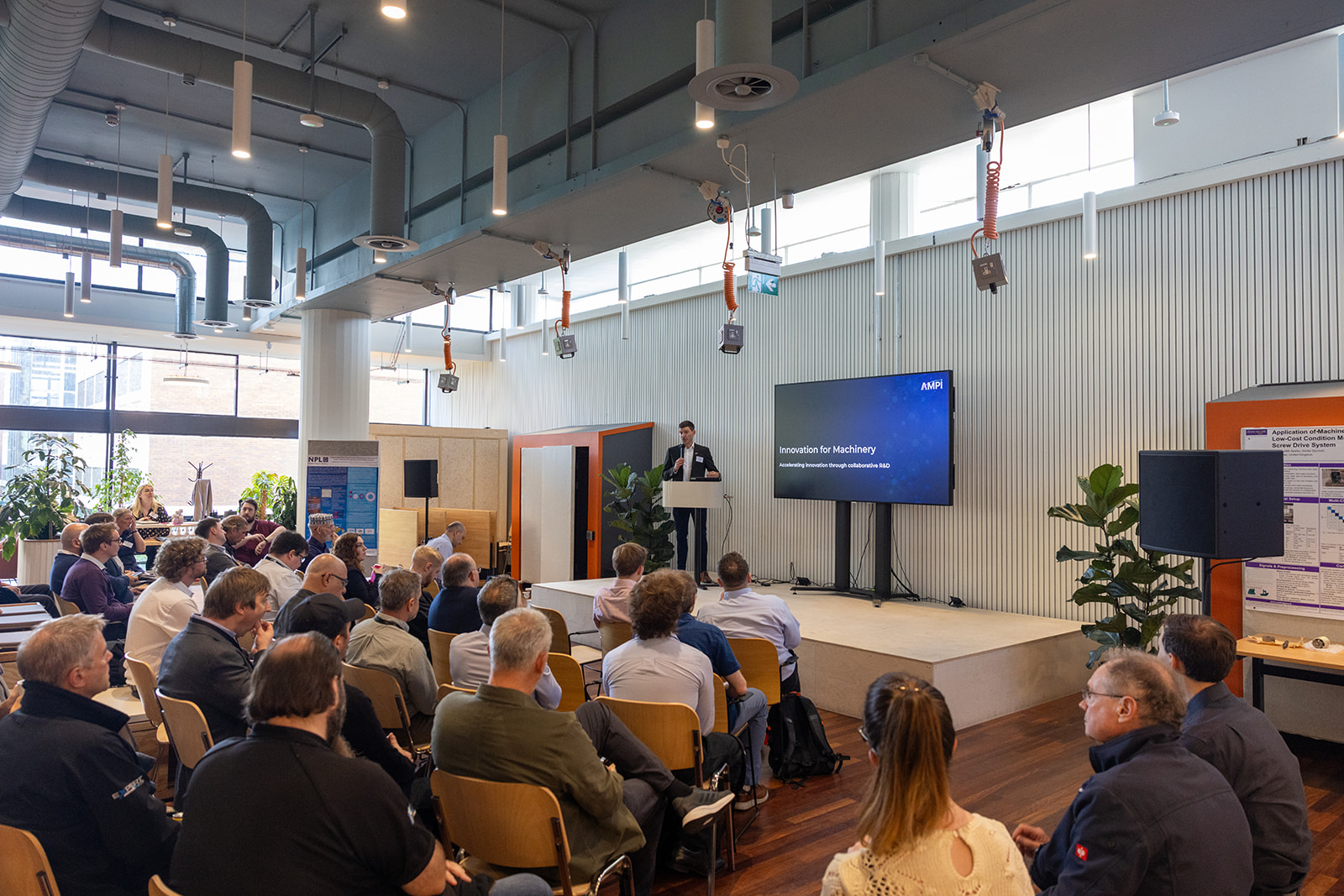
Four years since AMPI was formally launched, the Technology Showcase brought together a new ecosystem created through the programme, to capture the progress made so far, and outline the opportunity ahead.
Louise Bates of The University of Manchester set the tone in her welcome address, when she said “innovation is a team sport”. Over the course of the day, we saw that principle in action again and again.
The opening panel tackled the UK’s advanced machinery challenge head on. AMPI Institute Director Dan Brooks (NPL) was joined by Andrew Spalding of Machine Tool Technologies, Mark Roberts of Craven Fawcett (Group Rhodes), Professor Andrew Longstaff of the University of Huddersfield, and Gareth Edwards of NPL. The panel discussed the fragmentation of the machinery market and challenges it faced, including access to capital, a procurement system based on cost of acquisition rather than lifetime cost, and how SMEs focusing on ‘business as usual’ can struggle to commit time and resources to R&D or access the necessary skills.
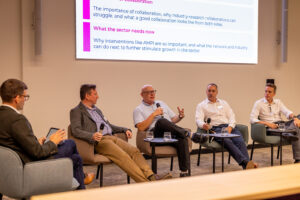
They charted how AMPI had created a community to connect people with the right skills and resources to enable companies to explore innovation and new concepts more easily. As Mark Roberts said: “the skillsets needed are very diverse, and impossible to have in house. So, an ecosystem like AMPI is essential”.
Commercial results from the AMPI programme are already being realised. Products developed through AMPI funding have generated £163 million in new revenue for UK machinery companies and forged 95 industry–academia collaborations. The morning showcase highlighted some of these projects, including those led by Fives Landis, Craftsman Tools, Wayland Additive, Holdson and CR Solutions (click the links to read more about what they achieved).
The presenters all pointed to one key benefit of AMPI: even though they may have pursued these avenues independently, it would have taken them much longer and been much harder to achieve the results they have without it. “We would probably have done it anyway, but it would have taken twice as long,” said Derry Falkner.
After lunch, Dan Brooks introduced Innovation for Machinery (I4M), AMPI’s platform for collaboration that helps machinery SMEs explore early ideas or solve problems blocking commercialisation by connecting them to partners from the ecosystem.
Seven companies then gave rapid-fire updates on collaborative R&D funded by AMPI: Andrew Spalding (Machine Tool Technologies), Jonny Hunter (Fibre Extrusion Technology), Louis Masters (Hydra Manufacturing), James Rynn (Anomalyse), Steven Stanley (Light Coatings), Paul Salloway (Coleherne) and Frank Podd (AI GPR).
The range was striking. Machine Tool Technologies is turning 20 years of servicing data into software that predicts machine wear. Anomalyse validated its predictive maintenance platform on NPL’s own CNC milling machine. Hydra Manufacturing, a University of Leeds spin-out, is building machinery to process hard-to-machine ceramics and metal matrix composites.
Hydra’s story shows how early backing made all the difference: “We were essentially able to spin out our company because we won an AMPI Advanced Machinery Innovation Fund project,” said CEO Louis Masters. “If it wasn’t for that early backing, we wouldn’t have a commercial system, and we wouldn’t have customers on the phone.”
If the lightning talks showed what collaborative R&D can achieve, the next session showed how to pay for the next step. Five funders and support organisations set out how they are investing in machinery innovation:
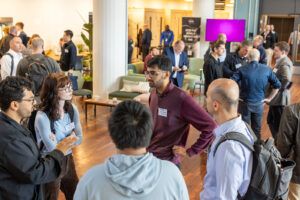
Between sessions, the co-working space was given over to networking and academic posters. When we spoke to attendees, the value of those connections came up again and again. As Louis Masters from Hydra Manufacturing said “Funding pays the bills, network support helps you grow.”
For Mark Stocker, CTO Grinding at Fives Landis, the most important outcome of AMPI was finding expertise on his own doorstep. “We would never have known how to go to Huddersfield University and find the right people; AMPI short-cut all that,” he said. “The links have been made, and there are loads of people now that we know.”
Professor Andrew Longstaff, University of Huddersfield, sees that shift as one of the programme’s biggest successes. “It’s not just me and the MDs talking now; it’s the next generation doing the talking,” he said.
Asked what the future should look like, attendees were strikingly consistent. “All we really need…is more of what we’re doing now,” said Andrew Spalding. “More connections, sharing opportunities and collaborating, because there’s loads to go round.”
It’s clear that there is much opportunity ahead for the advanced machinery industry, and its contribution to the UK economy, if we continue to build the ecosystem, forge the right connections and lay the groundwork for future growth.
If you represent a company, university or public sector programme that wants to help make the UK a world-leading producer of advanced machinery, we’d like to hear from you. Get in touch or follow AMPI on LinkedIn for more highlights.
Thank you to all our speakers, poster presenters and attendees, and to Sister Manchester for hosting us.